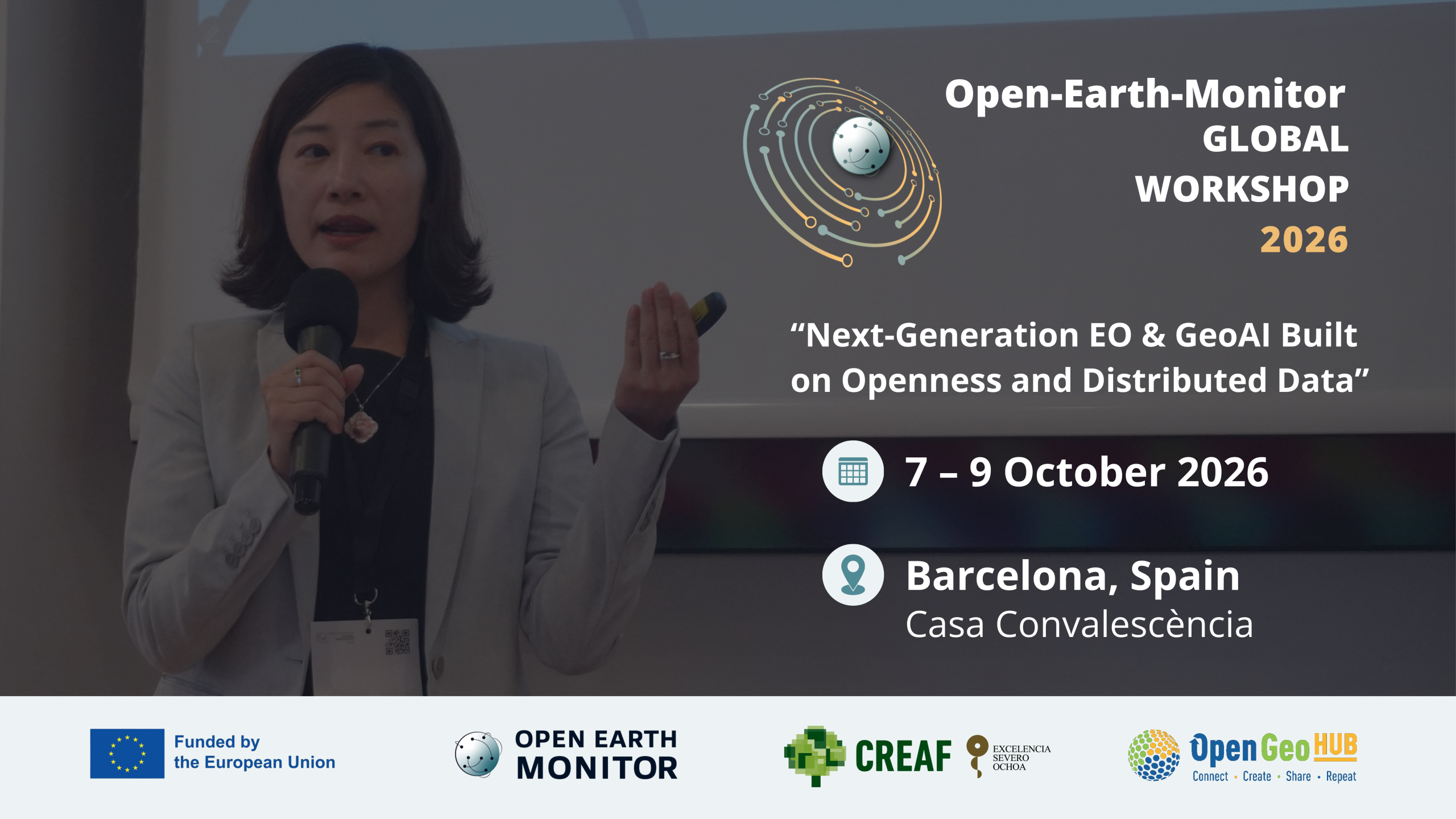
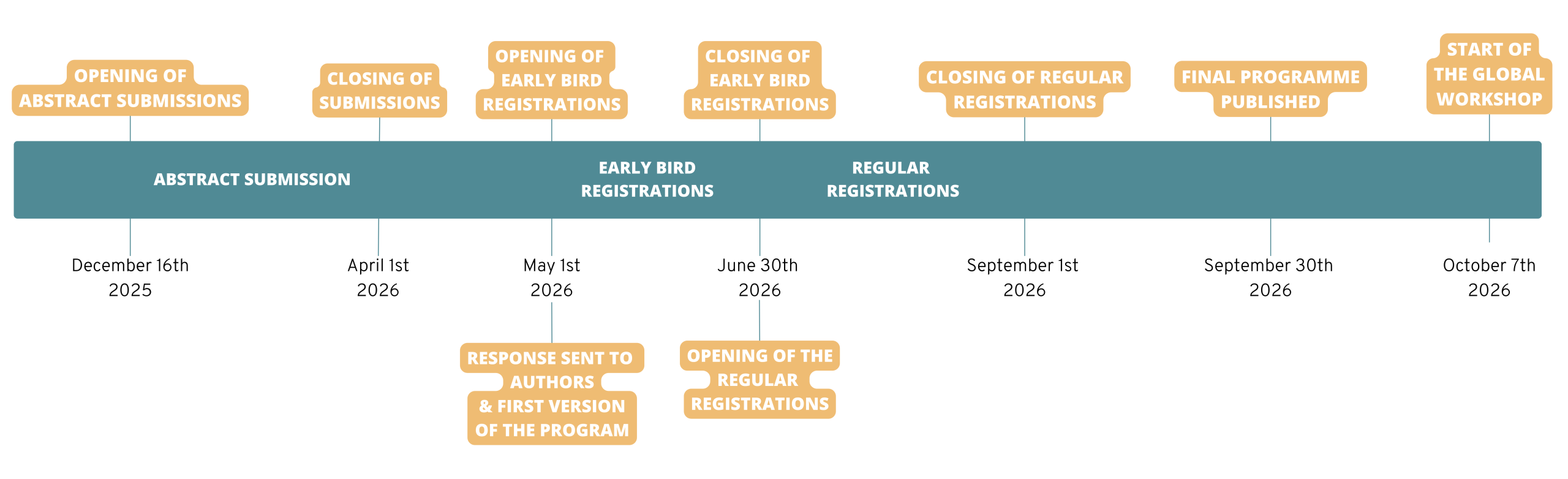
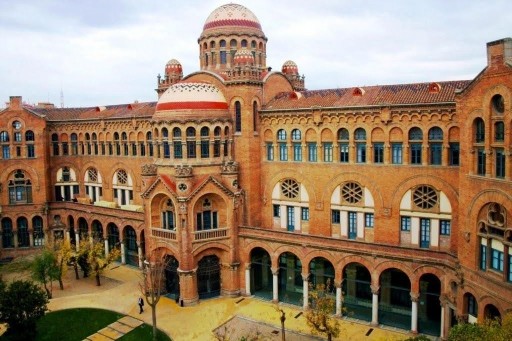
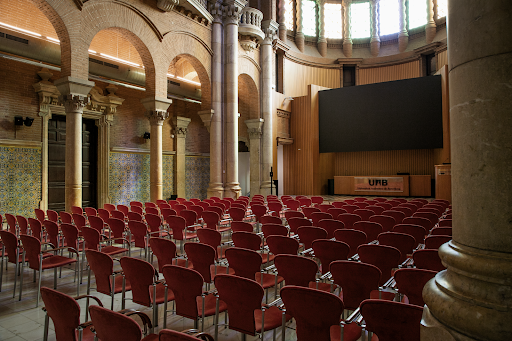
The Open-Earth-Monitor Cyberinfrastructure (OEMC) Global Workshop 2026: “Next-Generation EO & GeoAI Built on Openness and Distributed Data”, will be held in Barcelona, Spain, from 7–9 October 2026 (hosted by CREAF and the OpenGeoHub Foundation).
During this three-day hybrid event, the Open-Earth-Monitor consortium will present its final tools and outputs, fostering a dialogue with open-source technology developers and real-world users across policy, science, and industry to gather feedback and needs. The Open-Earth-Monitor Global Workshop is also an international gathering point for organisations, projects and professionals from around the world who are working in the field of open-source technology, Earth Observation data, and state-of-the-art tools to monitor our environment. The program will include discussions around the accessibility and usage of Earth Observation data, with broad participation from policy, academic, and business communities. Open-Earth-Monitor aims to bring together renowned experts in EO data to present and discuss the latest developments in the field and the outputs of this 4-year project. This year’s topic is “Next-Generation EO & GeoAI Built on Openness and Distributed Data”.
This year’s Global Workshop will be co-organised alongside an OGC Code Sprint, taking place at the same venue from 5-6 October 2026, a collaborative, hands-on event open to the broad community where dozens of developers from around the world come together to code, test, and exchange ideas, focused on advancing the development and implementation of OGC standards. The common thread of this edition will be standards related to data spaces and coverages. The Code Sprint will be hosted by the Open Geospatial Consortium (OGC) and CREAF, in cooperation with the OEMC Horizon Europe project and the OpenGeoHub foundation.
Earth Observation (EO) and geospatial data form the backbone of environmental monitoring at regional, national, and global scales, particularly in supporting the achievement of the climate targets set by the ambitious European Green Deal. A new generation of technologies (including advanced satellites, sensors, and data systems) is currently being deployed to monitor the Earth with significantly greater spatial detail, temporal frequency, and analytical capability than traditional systems. These next-generation Earth Observation technologies enable more accurate, timely, and actionable insights into environmental processes and changes.
The Open-Earth-Monitor Global Workshop invites scientists, developers, and innovators to present their original research, new technologies, state-of-the-art tools, and real-world applications aimed at seamlessly monitoring our environment across key domains relevant to European climate adaptation and resilience, including forestry, biodiversity, soil, water, agriculture, climate, and health. Special attention is given to the use of open-source data and software, scalable computing frameworks, near-real-time monitoring, people-centred approaches, and integrative solutions that combine in-situ observations with Earth Observation data.
All submissions will be reviewed by the workshop’s scientific committee. The highest-ranked proposals will be selected for presentation as oral talks, hands-on workshops, or posters.

Forest
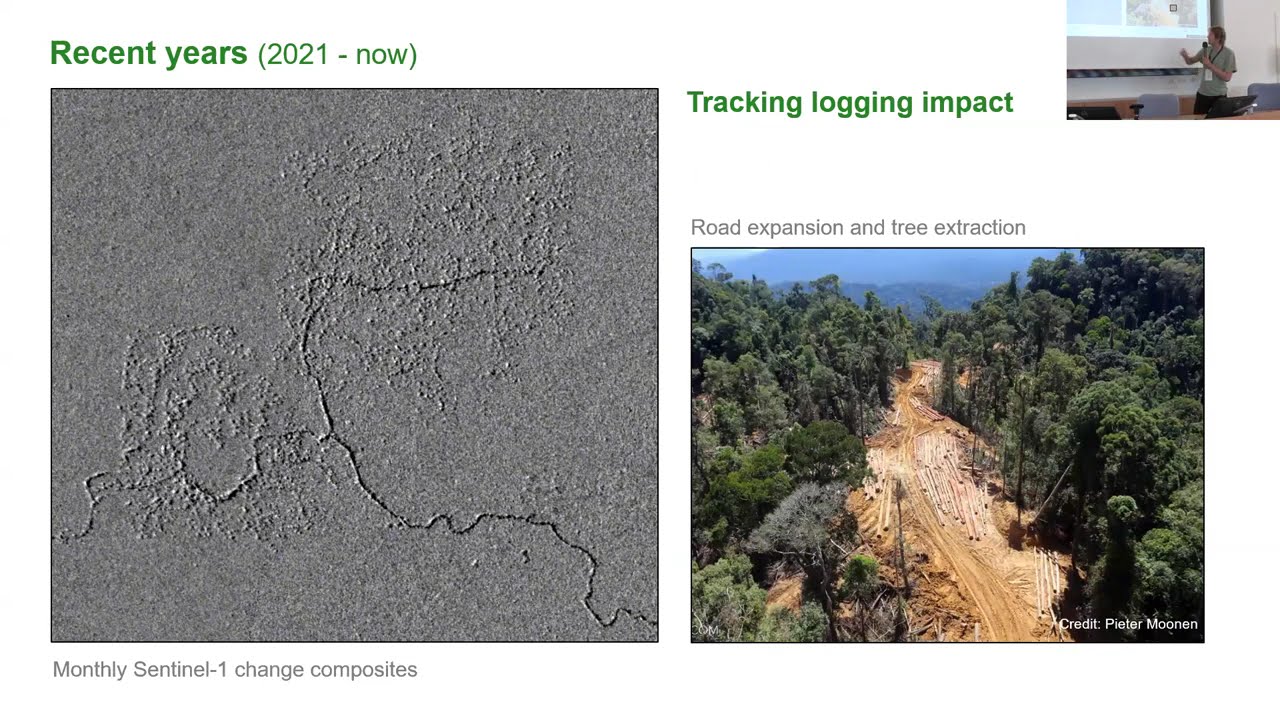
Innovative research, scalable tools, and interoperable services to monitor forest cover change, deforestation, and wildfire risk, and to support forest restoration and evidence-based environmental decision-making across local, national, and global scales.
Biodiversity
State-of-the-art methods, open tools, and EO services for accurate monitoring of biodiversity trends and indicators. Contributions may address conservation strategies, cross-domain environmental impacts, and research-based decision-making at local, national, and global scales.
Soil, water and agriculture
Reproducible workflows, FAIR data practices, and operational tools that support farmers, researchers, and policymakers in adapting to environmental change and improving soil restoration, water management, and agricultural resilience.
Climate and health
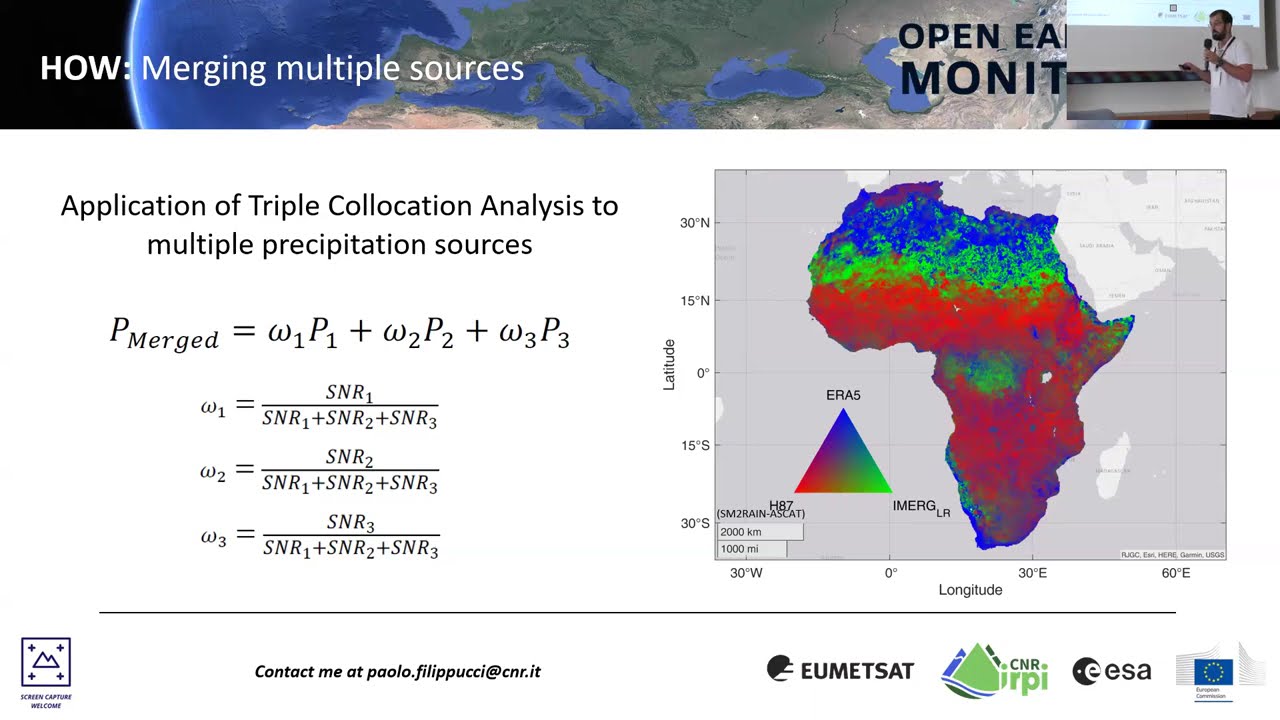
Open, accessible, data-driven solutions that support preparedness strategies and protect vulnerable communities from heat stress, air pollution, vector-borne disease risks, and extreme weather impacts through satellite-based monitoring and AI-driven analysis.